
by Jaco Coetzer | Sep 1, 2026 | Blog
Looking for a fire protection company in Gauteng that can assist with more than just fire extinguishers? Altrafire provides commercial and industrial fire protection services across Gauteng, including fire detection and alarm systems, firefighting equipment, automatic...
by Jaco Coetzer | Aug 31, 2026 | Blog
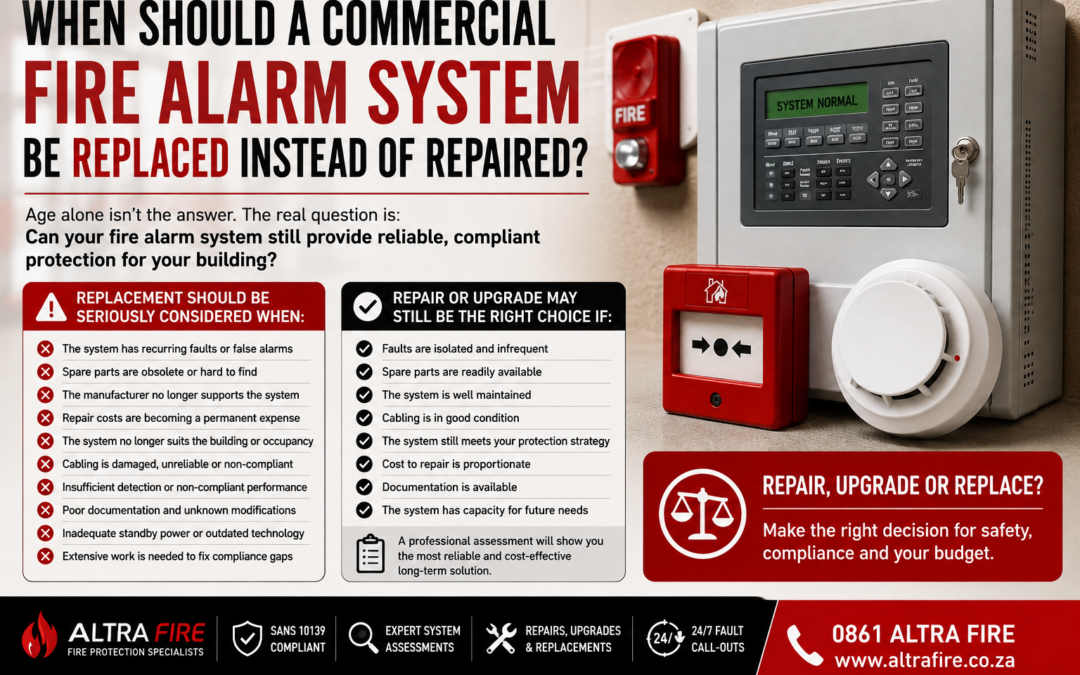
Your fire alarm has another fault. The technician can repair it — but this is the third or fourth repair in the last year. At some point, every facilities manager responsible for an ageing fire detection system asks the same question: “Should we repair this system...
by Jaco Coetzer | Aug 31, 2026 | Blog
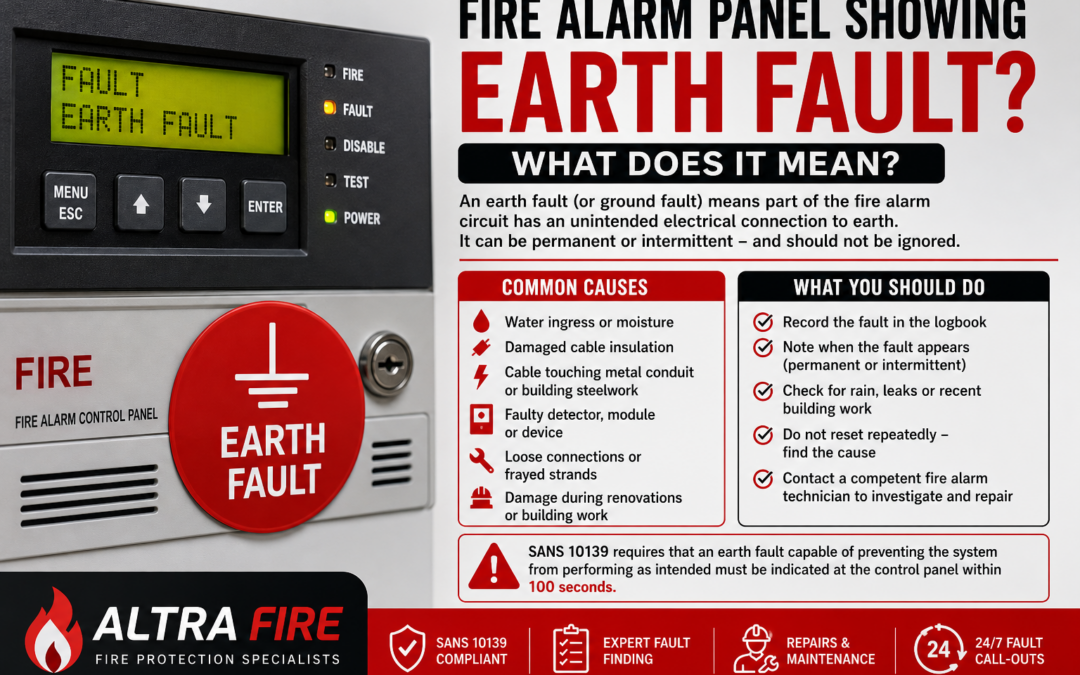
Your fire alarm panel is beeping and displaying “EARTH FAULT”, “GROUND FAULT” or a similar message. What does it mean — and is the fire alarm still working? An earth fault normally means that part of the fire alarm’s electrical wiring or equipment has developed...
by Jaco Coetzer | Aug 28, 2026 | Blog
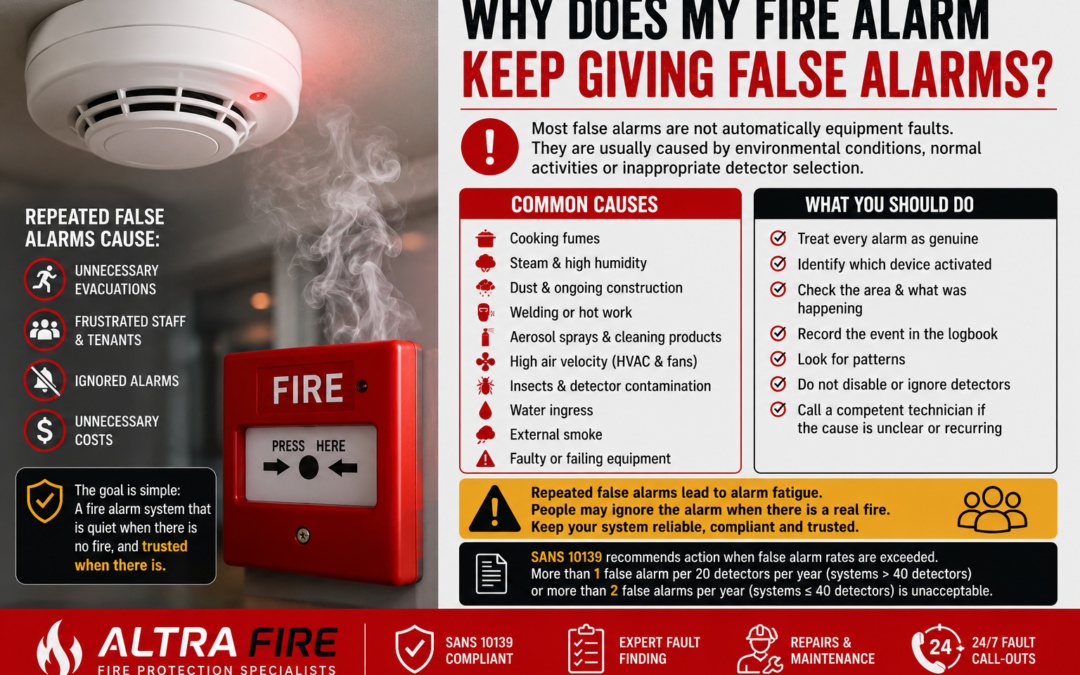
Does your fire alarm keep going off when there is no fire? Repeated false alarms are more than just annoying. They interrupt work, disrupt tenants, cause unnecessary evacuations, frustrate security staff and can eventually create something even more dangerous: people...

by Jaco Coetzer | Aug 28, 2026 | Blog
Your fire alarm panel is beeping and displaying “SUPPLY FAULT”, “MAINS FAULT”, “BATTERY FAULT”, “CHARGER FAULT” or a similar message. Is the fire alarm still working — and how urgent is the problem? A supply fault means that the fire alarm control panel has detected a...
